7 BC First-Time Home Buyer Grants and Incentives You Need to Know About

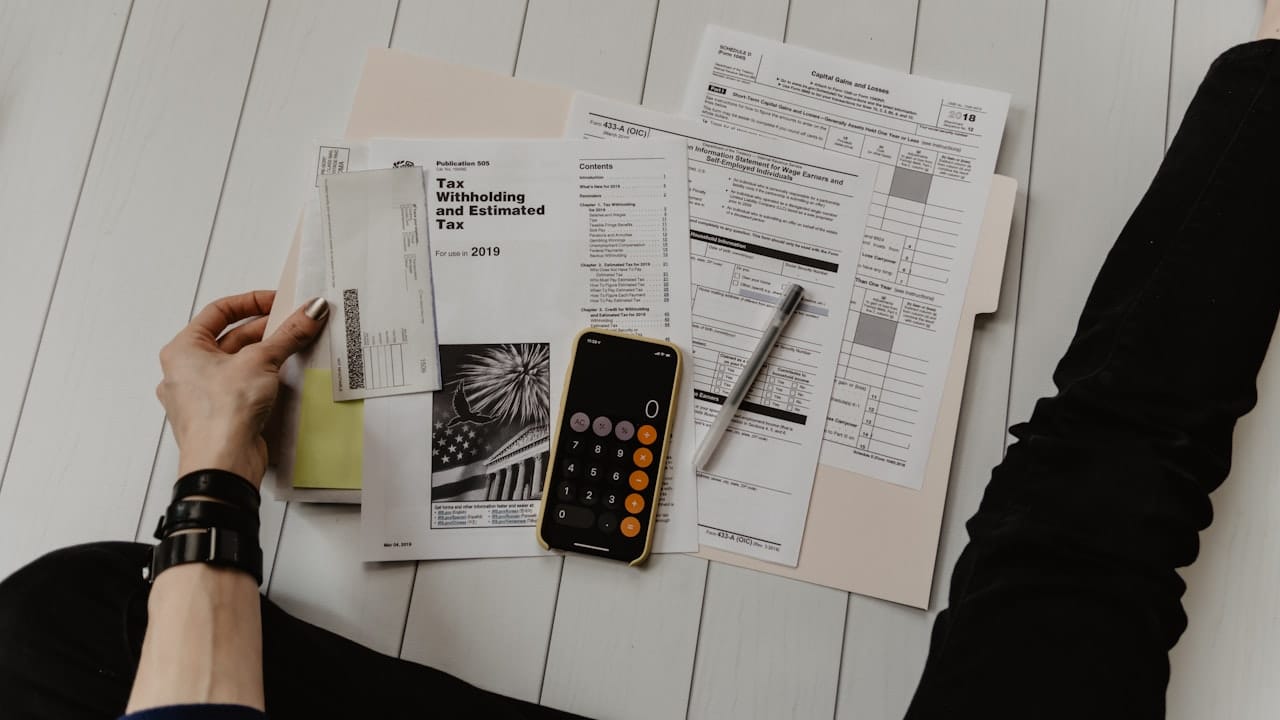
If you're saving for your first home in British Columbia, there's a good chance you're leaving money on the table. The BC first time home buyer grant landscape includes both provincial and federal programs, and when you stack them together, they can shave tens of thousands of dollars off your purchase. Some programs reduce your closing costs. Others give you tax-free savings vehicles that didn't exist a few years ago. And one brand-new federal rebate could put up to $50,000 back in your pocket if you're buying new construction.
The problem is that most first-time buyers only know about one or two of these programs. They hear about the property transfer tax exemption from their mortgage broker, maybe stumble across the FHSA on social media, and leave the rest undiscovered until after they've already signed.
This guide breaks down all seven programs available to first-time buyers in BC, what they're worth, who qualifies, and how to actually use them.
1. The BC Property Transfer Tax Exemption for First-Time Buyers
Every time a property changes hands in British Columbia, the buyer pays a provincial property transfer tax. The rates are progressive: 1% on the first $200,000 of fair market value, 2% on the portion between $200,000 and $2,000,000, and 3% on anything above that. On a $750,000 home, that's $13,000 due at closing. Not a small number.
But if you're a first-time buyer, the BC property transfer tax exemption can eliminate or significantly reduce that bill. Here's how the thresholds work since the April 2024 update:
- Full exemption on homes with a fair market value of $500,000 or less. You pay zero property transfer tax.
- Partial exemption on homes valued between $500,000 and $835,000. The first $500,000 is exempt, and you pay the standard rates on the remainder.
- No exemption on homes valued above $835,000.
The maximum savings under this program is $8,000. That's real money that stays in your bank account instead of going to the province on closing day.
To qualify, you need to be a Canadian citizen or permanent resident who has lived in BC for at least 12 consecutive months before the registration date (or filed at least two BC income tax returns in the last six years). You can never have owned a principal residence anywhere in the world. The home must be 0.5 hectares or smaller and used as your primary residence. You also need to move in within 92 days and live there for at least a year.
One important detail that trips people up: if you're buying with a partner who isn't a first-time buyer, only your share of the property qualifies for the exemption. So if you own 50%, you'd get 50% of the exemption amount.
2. The First Home Savings Account (FHSA)
The FHSA is one of the most powerful savings tools the federal government has introduced for first-time buyers in Canada, and it's still underused. Launched in 2023, this registered account lets you contribute up to $8,000 per year, with a lifetime maximum of $40,000, toward the purchase of your first home.
What makes the FHSA special is that it combines the best features of an RRSP and a TFSA. Your contributions are tax-deductible, meaning they reduce your taxable income for the year you claim them (just like an RRSP). And when you withdraw the money to buy a qualifying home, the withdrawal is completely tax-free (just like a TFSA). Any investment growth inside the account is also tax-free. You get a deduction going in and pay nothing coming out. No other registered account in Canada works this way.
If you don't max out your $8,000 in a given year, you can carry forward the unused room to the next year, up to a maximum of $8,000 in carry-forward. So if you contribute $5,000 in 2025, you'll have $11,000 in contribution room for 2026 ($8,000 new room plus $3,000 carry-forward). But carry-forward room only starts accumulating after you open the account. This is why financial advisors keep saying the same thing: open your FHSA now, even if you can only contribute a small amount. Every year you wait is a year of lost contribution room.
Both you and your partner can each hold an FHSA. That means a couple could save up to $80,000 tax-free toward a down payment together. The account stays open for 15 years or until you turn 71, whichever comes first.
Here's a scenario that shows the real impact. If you're earning $70,000 a year and you contribute $8,000 to your FHSA, that deduction saves you roughly $2,400 in taxes at a marginal rate of about 30%. Do that for five years and you've got $40,000 saved for your home plus approximately $12,000 in total tax savings, not counting any investment growth inside the account.
3. The RRSP Home Buyers' Plan (HBP)
The Home Buyers' Plan has been around for decades, but it got a significant upgrade in April 2024 when the federal government raised the withdrawal limit from $35,000 to $60,000 per person. If you're buying with a spouse or partner who also qualifies, you can pull out a combined $120,000 from your RRSPs, tax-free, to put toward your down payment.
The HBP works differently from the FHSA. You're not getting a permanent tax break; you're borrowing from your own retirement savings. The withdrawn amount must be repaid to your RRSP over a 15-year period, with minimum annual repayments of 1/15th of the total. If you withdrew $60,000, that's $4,000 per year you need to put back. Miss a repayment and that amount gets added to your taxable income for the year.
A few rules to keep in mind: the funds must have been sitting in your RRSP for at least 90 days before you withdraw them. You must be a first-time buyer or not have owned a home in the previous four years. And you need to occupy the property as your principal residence within one year of purchase.
The smart play is to use the FHSA and HBP together. Max out your FHSA first because those withdrawals are permanently tax-free. Then use the HBP for additional down payment funds. A couple doing both could access up to $200,000 between the two programs ($80,000 from two FHSAs plus $120,000 from two HBPs).
4. The First-Time Home Buyers' Tax Credit (HBTC)
This one is straightforward and often overlooked because the dollar amount is smaller than the other programs. The federal First-Time Home Buyers' Tax Credit provides a non-refundable tax credit of $10,000, which translates to a maximum tax rebate of $1,500 on your federal income tax return.
You claim it when you file your taxes for the year you purchased your home. It's designed to help offset closing costs like legal fees, land transfer taxes, and home inspections. You don't need to provide receipts for those expenses; the credit is a flat amount available to anyone who qualifies as a first-time buyer.
Both you and your spouse can claim the credit, but the combined total can't exceed $10,000. So if you split it evenly, you'd each claim $5,000 for $750 in tax savings each.
It won't change your life, but $1,500 is $1,500. There's no reason not to claim it, and plenty of first-time buyers forget.
5. The BC Home Owner Grant
Once you've purchased your home, the BC Home Owner Grant helps reduce your annual property taxes. This isn't a one-time benefit; it's something you claim every year as long as you live in the property.
For 2026, the grant amounts are:
- Up to $770 for homeowners outside of Metro Vancouver and the Fraser Valley (which includes Kelowna and most of the Okanagan)
- Up to $570 for homeowners in Metro Vancouver and the Fraser Valley
- Up to $1,045 for eligible seniors, veterans, and people with disabilities (outside Metro Vancouver)
The grant threshold for 2026 is based on your property's assessed value. If your home is assessed at $2,075,000 or less, you can claim the full grant. Above that, the grant is reduced by $5 for every $1,000 of assessed value over the threshold, and it phases out entirely at $2,189,000 for the basic grant.
For most first-time buyers purchasing in the Okanagan, you'll comfortably qualify. The $770 annual grant won't make headlines, but it adds up. Over 10 years of ownership, that's $7,700 in property tax savings.
You need to apply for the grant each year. Your municipality usually includes instructions with your property tax notice, and you can apply online through the BC government website. Don't forget, because the grant doesn't apply automatically.
6. The Newly Built Home PTT Exemption
This one isn't exclusive to first-time buyers, which is what makes it particularly useful. If you're purchasing a newly built home in BC to use as your principal residence, you may qualify for a separate property transfer tax exemption with higher thresholds than the first-time buyer exemption.
The newly built home exemption provides:
- Full exemption on new homes valued at $1,100,000 or less
- Partial exemption on homes valued between $1,100,000 and $1,150,000
- No exemption above $1,150,000
This exemption can save you up to approximately $20,000 in property transfer tax. And here's the key: if you're a first-time buyer purchasing a new build priced under $835,000, you actually get to choose which exemption gives you the better deal (though in most cases the newly built home exemption is more generous at higher price points since it covers a wider range).
To qualify, you must be a Canadian citizen or permanent resident, the home must be a new build that hasn't been previously occupied, and you need to move in within 92 days and live there for at least a year.
7. The New Federal GST Rebate for First-Time Home Buyers
This is the newest and potentially the most valuable incentive on the list. In May 2025, the federal government tabled legislation to introduce a first-time home buyers' GST rebate that could save eligible buyers up to $50,000 on newly constructed or substantially renovated homes.
Here's how the GST new home rebate works for first-time buyers under this new program:
- Homes valued up to $1,000,000: You can recover 100% of the GST (5%) paid on the purchase, up to a maximum rebate of $50,000.
- Homes valued between $1,000,000 and $1,500,000: The rebate is gradually reduced. A $1.25 million home would qualify for roughly half the maximum rebate.
- Homes above $1,500,000: No rebate available.
To qualify, you need to be a first-time home buyer (meaning you haven't owned a home you lived in during the past four calendar years). The purchase agreement must be entered into on or after May 27, 2025. The home must be newly built or substantially renovated, and it must be your primary residence. Neither you nor your spouse can have previously received this rebate.
This rebate exists on top of the existing GST/HST New Housing Rebate that's been available for years. So the new program acts as a top-up, covering more of the tax burden for qualifying first-time buyers.
One important caveat: as of early 2026, the proposed legislation (Bill C-4) has not yet received Royal Assent. The CRA won't process claims until the bill is officially passed. Given the near-unanimous support it has received in Parliament, most industry observers expect it to become law. Plan as though this rebate will be available, but verify the status with your lawyer or accountant before closing.
How to Stack These BC First Time Home Buyer Incentives Together
The real magic happens when you combine multiple programs. Let's walk through a realistic example.
Say you're a first-time buyer in BC purchasing a newly built townhouse for $800,000. Here's what you could potentially save:
- FHSA withdrawals: $40,000 in tax-free savings (plus the tax deductions you received over the years you contributed)
- HBP withdrawal: Up to $60,000 from your RRSP
- BC property transfer tax exemption: Approximately $5,300 saved (full exemption on first $500,000, tax on the remaining $300,000)
- Newly built home PTT exemption: If you use this instead, full exemption on the entire $800,000, saving you $14,000
- First-Time Home Buyers' Tax Credit: $1,500 on your next tax return
- BC Home Owner Grant: $770 annually
- New federal GST rebate: Up to $40,000 back on the GST paid (5% of $800,000)
Between the PTT exemption, the tax credit, the GST rebate, and the annual Home Owner Grant, you're looking at more than $55,000 in direct savings on a single purchase, not counting the tax advantages of the FHSA or the down payment power of the HBP.
That changes the math on homeownership considerably.
Don't Leave Money on the Table
These programs exist specifically to make buying your first home more affordable. But they only work if you know about them and plan ahead. Open your FHSA now, even if you're not buying for a few years. Start contributing to your RRSP with the HBP in mind. Talk to a mortgage broker who understands how to layer these incentives. And if you're considering new construction, the combination of the newly built home PTT exemption and the new GST rebate could save you a staggering amount.
If you're thinking about buying your first home in the Okanagan and want to understand exactly which programs apply to your situation, I'd love to help you map it out. Reach out for a no-pressure conversation and we'll figure out the smartest path to getting you into your first home. For a step-by-step walkthrough, read our first-time buyer Kelowna guide and download the free buyer's guide. Curious how much house your income supports? Check out how much house you can afford in Kelowna.
Share this article